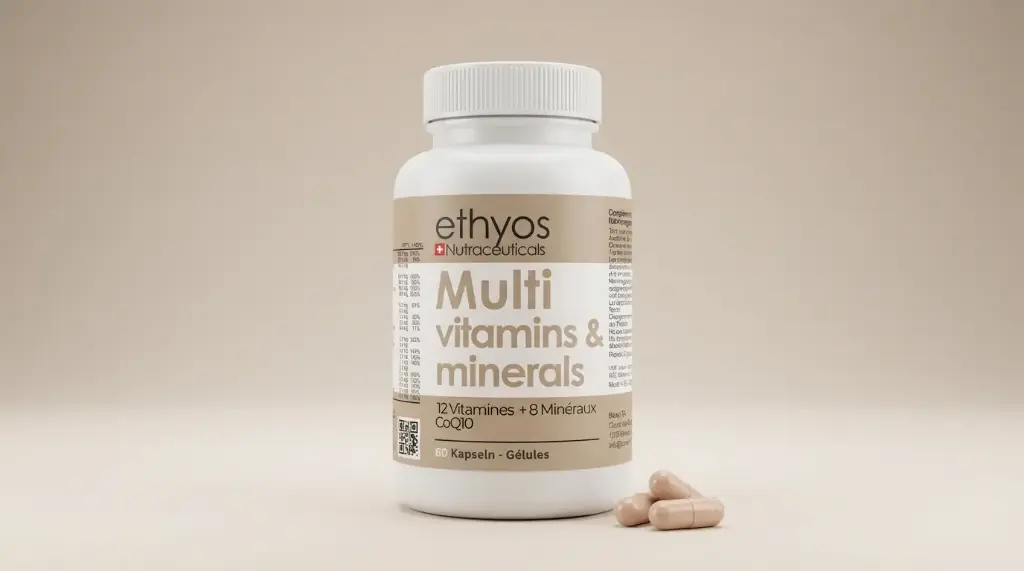

ethyos - Multivitamin Daily
Daily micronutrient coverage
This formula is built as a daily multivitamin-mineral blend to complement a varied diet. It combines key vitamins, minerals, and a small set of additional actives in one serving. The overall aim is broad nutritional support for everyday routines without focusing on a single niche outcome.
Energy-yielding metabolism focus
Several B vitamins are included to support normal energy metabolism, including thiamine (B1), riboflavin (B2), niacin (B3), pantothenic acid (B5), and an active form of vitamin B6 (pyridoxal-5'-phosphate). Magnesium bisglycinate complements these pathways as a widely used magnesium form. Coenzyme Q10 is added as a physiologically active compound often used alongside energy-related nutrient stacks.
Immune and seasonal wellness support
The formula includes vitamin C (from calcium L-ascorbate), vitamin D3, zinc, and selenium—nutrients commonly used to support normal immune function. These are paired with vitamin E to broaden antioxidant nutrient coverage. This combination is intended for general wellness support rather than any medical purpose.
Antioxidant nutrient network
Vitamin C and vitamin E provide complementary antioxidant nutrient roles, while selenium supports antioxidant enzyme systems. Coenzyme Q10 adds another antioxidant-related nutrient often used in daily wellness formulas. Together, these ingredients help create a balanced antioxidant-oriented profile within a multinutrient base.
Carotenoids and eye-related nutrients
Calendula officinalis flower extract is standardized to lutein, a carotenoid commonly used in vision-focused nutrition. Synthetic beta-carotene contributes provitamin A activity, supporting overall micronutrient diversity. Zinc and riboflavin provide additional supportive nutrients often associated with normal eye function.
Minerals and trace elements for broad support
The mineral profile includes magnesium, zinc, manganese, iodine, chromium, molybdenum, boron, and selenium in defined forms. These trace elements are included to complement everyday dietary intake and support multiple physiological systems. Active folate (L-methylfolate) and methylcobalamin (B12) are included to round out the B-vitamin spectrum.
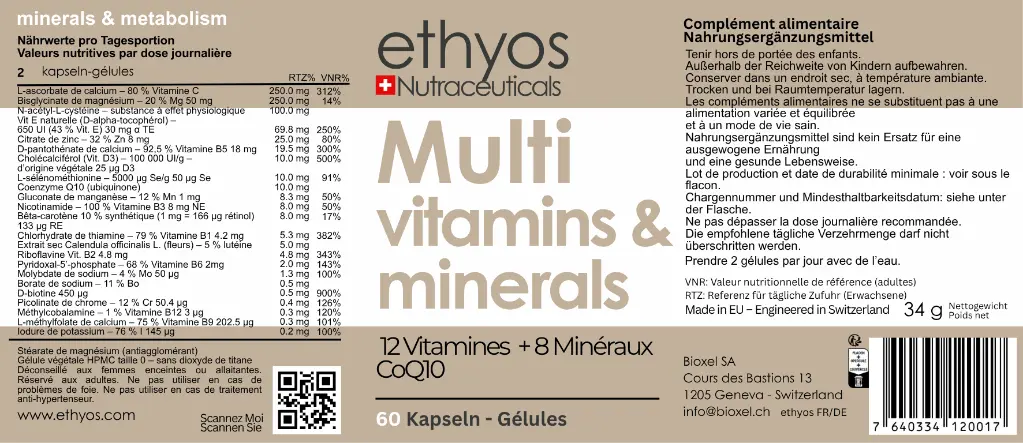
| Class | Ingredient | Quantity | NRV% |
|---|---|---|---|
| Vitamine | Calcium L-ascorbate – 80% Vitamin C | 250.0 mg | 250.0 |
| Mineraal | Magnesium bisglycinate – 20% Mg | 250.0 mg | 13.0 |
| Aminozuur | N-acetyl-L-cysteine – physiologically active substance | 100.0 mg | 0.0 |
| Vitamine | Natural Vitamin E (D-alpha-tocopherol) – 650 IU (43% Vitamin E) | 69.8 mg | 250.0 |
| Mineraal | Zinc citrate – 32% Zn | 25.0 mg | 80.0 |
| Vitamine | D-calcium pantothenate – 92.5% Vitamin B5 | 19.5 mg | 301.0 |
| Vitamine | Cholecalciferol (Vitamin D3) – 100,000 IU/g – of vegetable origin | 10.0 mg | 500.0 |
| Mineraal | L-selenomethionine – 5000 µg Se/g | 10.0 mg | 91.0 |
| Other active | Coenzyme Q10 (ubiquinone) – physiologically active compound | 10.0 mg | 0.0 |
| Mineraal | Manganese gluconate – 12% Mn | 8.3 mg | 50.0 |
| Vitamine | Nicotinamide – 100% Vitamin B3 | 8.0 mg | 50.0 |
| Vitamine | Synthetic beta-carotene 10% (1 mg = 166 µg retinol equivalent) | 8.0 mg | 17.0 |
| Vitamine | Thiamine hydrochloride – 79% Vitamin B1 | 5.3 mg | 381.0 |
| Plantenextract | Calendula officinalis L. dry extract (flowers) – 5% lutein (HPLC 4:1) | 5.0 mg | 0.0 |
| Vitamine | Riboflavin | 4.8 mg | 343.0 |
| Vitamine | Pyridoxal-5'-phosphate – 68% Vitamin B6 | 2.0 mg | 97.0 |
| Mineraal | Sodium molybdate – 4% Mo | 1.3 mg | 104.0 |
| Mineraal | Sodium borate – 11% B | 0.5 mg | 0.0 |
| Vitamine | D-biotin | 0.5 mg | 1000.0 |
| Mineraal | Chromium picolinate – 12% Cr | 0.4 mg | 120.0 |
| Vitamine | Methylcobalamin – 1% Vitamin B12 | 0.3 mg | 120.0 |
| Vitamine | Calcium L-methylfolate – 75% Vitamin B9 | 0.3 mg | 113.0 |
| Mineraal | Potassium iodide – 76% I | 0.2 mg | 101.0 |
| Hulpstof | Magnesium stearate – flow agent (anti-caking) | 12.0 mg | 0.0 |
| Envelope | Vegetable HPMC capsule size 0 – titanium dioxide free | 236.0 mg | 0.0 |
Capsules Ingredients: Magnesium stearate – flow agent (anti-caking) 12 mg; Vegetable HPMC capsule size 0 – titanium dioxide free 236 mg
Allergens:
| Title | Description |
|---|---|
| Pregnancy – Medium Risk | Contains preformed vitamin-related precursors (beta-carotene/retinol equivalents) and iodine, so use during pregnancy should be discussed with a healthcare professional. |
| Breastfeeding – Medium Risk | Iodine and fat-soluble vitamins are present; breastfeeding individuals should seek professional advice before use. |
| Thyroid disorders – Medium Risk | Contains iodine (potassium iodide), which may be unsuitable for some thyroid conditions depending on medical guidance. |
| Kidney impairment – Medium Risk | Minerals such as magnesium and trace elements may require caution in reduced kidney function. |
| History of kidney stones – Low Risk | Vitamin C is provided as calcium ascorbate; individuals prone to stones may prefer medical guidance on total vitamin C intake. |
| Known sensitivity to niacin-like compounds – Low Risk | Nicotinamide is included; sensitive individuals may prefer to start with a lower exposure from all sources. |
| Title | Description |
|---|---|
| Gastrointestinal discomfort – Low Risk | Magnesium, vitamin C, and zinc can cause mild stomach upset in some people, especially on an empty stomach. |
| Nausea – Low Risk | Zinc-containing supplements may cause nausea in sensitive individuals, particularly if taken without food. |
| Loose stools – Low Risk | Magnesium forms can contribute to softer stools in some users depending on individual tolerance. |
| Headache or restlessness – Low Risk | Some individuals report nonspecific symptoms when starting multinutrient products, which often improves with dose timing and food. |
| Title | Description |
|---|---|
| Thyroid hormone therapy (e.g., levothyroxine) – Medium Risk | Minerals such as magnesium and zinc may interfere with absorption if taken too close; separate dosing by several hours. |
| Antibiotics (tetracyclines/quinolones) – Medium Risk | Magnesium and zinc can bind certain antibiotics and reduce absorption; take at different times as advised by a clinician. |
| Anticoagulants/antiplatelets – Medium Risk | Vitamin E is included; people using blood-thinning medication should consult a healthcare professional before use. |
| Diabetes medications – Low Risk | Chromium picolinate is included and may affect glucose handling; monitor as appropriate with professional guidance. |
| Immunosuppressant therapy – Low Risk | High overall micronutrient intake may be relevant for people on immunosuppressants; discuss suitability with a clinician. |
| Title | Description |
|---|---|
| General supplement warning – Low Risk | Food supplements should not be used as a substitute for a varied and balanced diet and a healthy lifestyle. |
| Daily dose warning – Low Risk | Do not exceed the recommended daily intake. |
| Children warning – Low Risk | Keep out of reach of young children. |
| Pregnancy and breastfeeding warning – Medium Risk | If you are pregnant, breastfeeding, trying to conceive, or under medical supervision, consult a healthcare professional before use due to iodine and fat-soluble vitamins. |
| Medication timing warning – Medium Risk | If you take thyroid medication or certain antibiotics, separate this product from medicines by several hours to avoid absorption interference from minerals. |
| Manufacturing trace warning – Low Risk | May contain very small amounts of allergens due to shared production equipment, even when not present in the ingredient list. |
| Title | Description | Bioavailability |
|---|---|---|
| Calcium L-ascorbate – 80% Vitamin C | Provides vitamin C in a buffered ascorbate form to support daily micronutrient intake. | Mineral ascorbate form with typical physiological availability. |
| Magnesium bisglycinate – 20% Mg | Supplies magnesium in a chelated form to support overall mineral intake. | Chelated (bisglycinate) form commonly used for favorable gastrointestinal tolerance and absorption. |
| N-acetyl-L-cysteine – physiologically active substance | Provides NAC, an acetylated amino acid derivative used in antioxidant-related nutrient formulas. | Acetylated amino acid form used in food supplements with typical absorption characteristics. |
| Natural Vitamin E (D-alpha-tocopherol) – 650 IU (43% Vitamin E) | Provides vitamin E (d-alpha-tocopherol) to support antioxidant nutrient intake. | Natural d-alpha-tocopherol form with typical physiological availability. |
| Zinc citrate – 32% Zn | Supplies zinc to support daily trace mineral intake. | Citrate salt form with typical physiological availability. |
| D-calcium pantothenate – 92.5% Vitamin B5 | Provides pantothenic acid (vitamin B5) to support B-vitamin intake. | Standard vitamin salt form with typical physiological availability. |
| Cholecalciferol (Vitamin D3) – 100,000 IU/g – of vegetable origin | Provides vitamin D3 to support daily vitamin D intake. | Cholecalciferol form with typical physiological availability. |
| L-selenomethionine – 5000 µg Se/g | Supplies selenium in an amino-acid-bound form to support trace element intake. | Selenomethionine form commonly used for good bioavailability. |
| Coenzyme Q10 (ubiquinone) – physiologically active compound | Provides coenzyme Q10 (ubiquinone) as a complementary nutrient used in cellular energy and antioxidant-oriented formulas. | Ubiquinone form with typical absorption characteristics; uptake is generally improved when taken with dietary fat. |
| Manganese gluconate – 12% Mn | Supplies manganese to support trace mineral intake. | Gluconate salt form with typical physiological availability. |
| Nicotinamide – 100% Vitamin B3 | Provides niacin as nicotinamide to support vitamin B3 intake. | Standard vitamin form with typical physiological availability. |
| Synthetic beta-carotene 10% (1 mg = 166 µg retinol equivalent) | Provides beta-carotene as a provitamin A carotenoid to support micronutrient intake. | Standard carotenoid form with typical absorption characteristics; absorption is generally improved with dietary fat. |
| Thiamine hydrochloride – 79% Vitamin B1 | Provides thiamine (vitamin B1) to support B-vitamin intake. | Hydrochloride salt form with typical physiological availability. |
| Calendula officinalis L. dry extract (flowers) – 5% lutein (HPLC 4:1) | Provides a standardized calendula flower extract supplying lutein as a carotenoid nutrient. | Standardized botanical extract with typical absorption characteristics. |
| Riboflavin | Provides riboflavin (vitamin B2) to support B-vitamin intake. | Standard nutrient form with typical physiological availability. |
| Pyridoxal-5'-phosphate – 68% Vitamin B6 | Provides vitamin B6 in its coenzyme form (P-5-P) to support B-vitamin intake. | Coenzyme (active) form with typical physiological availability. |
| Sodium molybdate – 4% Mo | Supplies molybdenum to support trace mineral intake. | Inorganic salt form with typical physiological availability. |
| Sodium borate – 11% B | Supplies boron as a trace element to complement mineral intake. | Inorganic salt form used in food supplements with typical absorption characteristics. |
| D-biotin | Provides biotin (vitamin B7) to support B-vitamin intake. | Standard vitamin form with typical physiological availability. |
| Chromium picolinate – 12% Cr | Supplies chromium in a picolinate form to support trace mineral intake. | Picolinate chelate form commonly used in supplements with typical absorption characteristics. |
| Methylcobalamin – 1% Vitamin B12 | Provides vitamin B12 in a methylcobalamin form to support B12 intake. | Coenzyme (methylated) form with typical physiological availability. |
| Calcium L-methylfolate – 75% Vitamin B9 | Provides folate as L-methylfolate to support vitamin B9 intake. | Methylated folate form with typical physiological availability. |
| Potassium iodide – 76% I | Supplies iodine to support trace element intake. | Iodide salt form with typical physiological availability. |
| Magnesium stearate – flow agent (anti-caking) | Flow agent used to improve powder processing and reduce clumping during manufacturing. | Not applicable for excipients. |
| Vegetable HPMC capsule size 0 – titanium dioxide free | Capsule shell used to contain and deliver the ingredients. | Not applicable for excipients. |
| Allergen | Source Ingredient | Mandatory | Inference |
|---|---|---|---|
| None | None | No | None |
Population & target users:
- Adults (18+) seeking daily micronutrient coverage.
- Not intended for children.
How to take:
- Take 1 capsule daily with a meal and a glass of water.
- If sensitive to minerals, take with the main meal of the day.
Duration of use:
- Suitable for daily use; consider reassessing after 8–12 weeks based on diet and individual needs.
Storage & conservation:
- Store in a cool, dry place away from direct sunlight.
- Keep the container tightly closed and out of reach of children.
| MDC BRANDS: Ethyos |

Voordelen

Overall Health
Designed as a daily micronutrient top-up to help cover common dietary gaps using a broad spectrum of vitamins and minerals. Ingredients such as vitamin C (from calcium L-ascorbate), vitamin D3, B-complex forms, zinc, selenium, iodine, and magnesium support general nutritional coverage. Coenzyme Q10 and beta-carotene add additional nutritional variety for everyday wellness routines.
Energy Metabolism
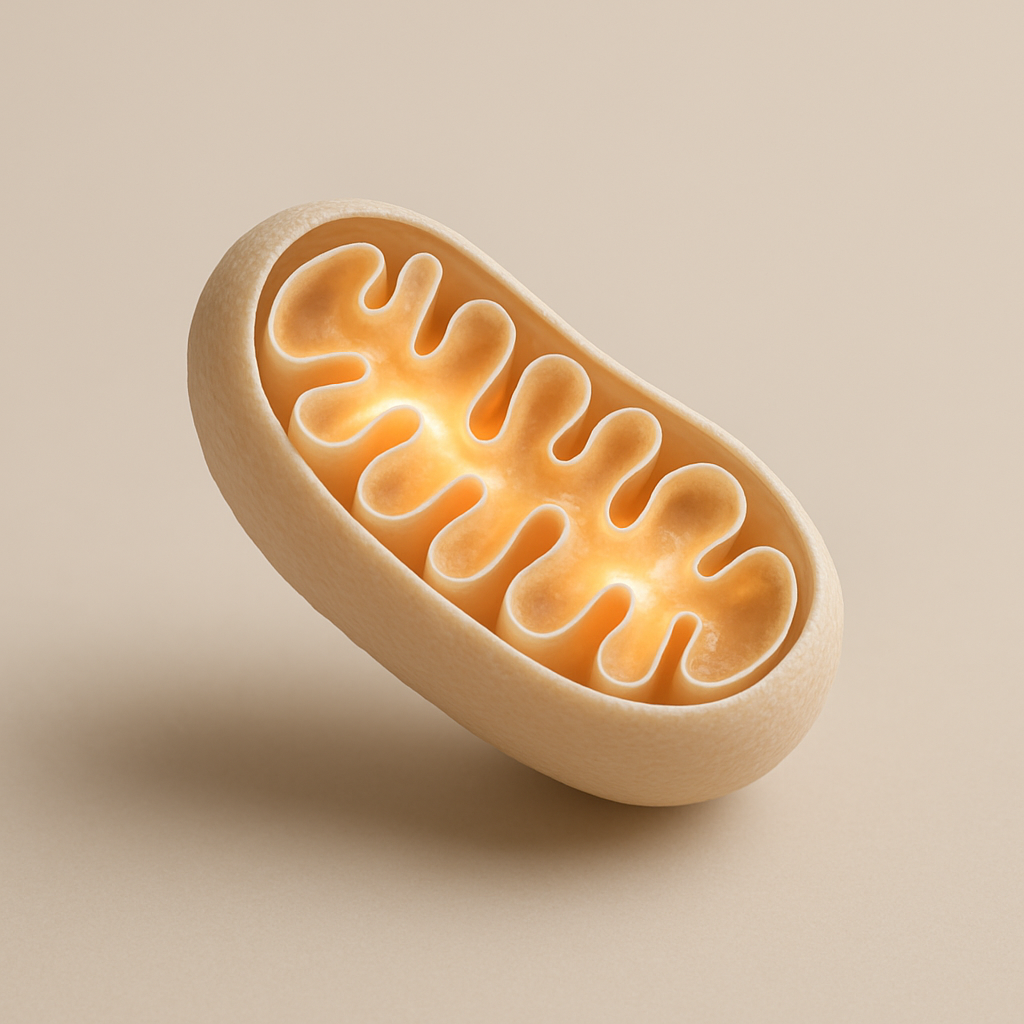
Supports everyday energy-yielding metabolism through B vitamins including thiamine (B1), riboflavin (B2), nicotinamide (B3), pantothenic acid (B5), and active B6 (pyridoxal-5'-phosphate). Magnesium bisglycinate and coenzyme Q10 are included to complement cellular energy pathways. This use case is most relevant for people looking to maintain normal daily vitality during busy periods.

Immune Support
Provides nutrients commonly used to support normal immune function, including vitamin C, vitamin D3, zinc, and selenium. Vitamin E contributes to antioxidant nutrient coverage that can complement immune-related wellness goals. This is intended for general seasonal and lifestyle support rather than any therapeutic purpose.

Antioxidant
Includes several antioxidant-related nutrients such as vitamin C, vitamin E (d-alpha-tocopherol), selenium (as L-selenomethionine), and coenzyme Q10. Beta-carotene and calendula extract (standardized to lutein) add carotenoid support. This may suit individuals aiming to maintain oxidative balance as part of a healthy lifestyle.

Vision Health
Contains carotenoids relevant to visual wellness, including lutein from Calendula officinalis extract and beta-carotene (a vitamin A precursor). Riboflavin and zinc are also included as supportive micronutrients often associated with normal eye function. This benefit is complementary within a broader multivitamin-mineral formula.