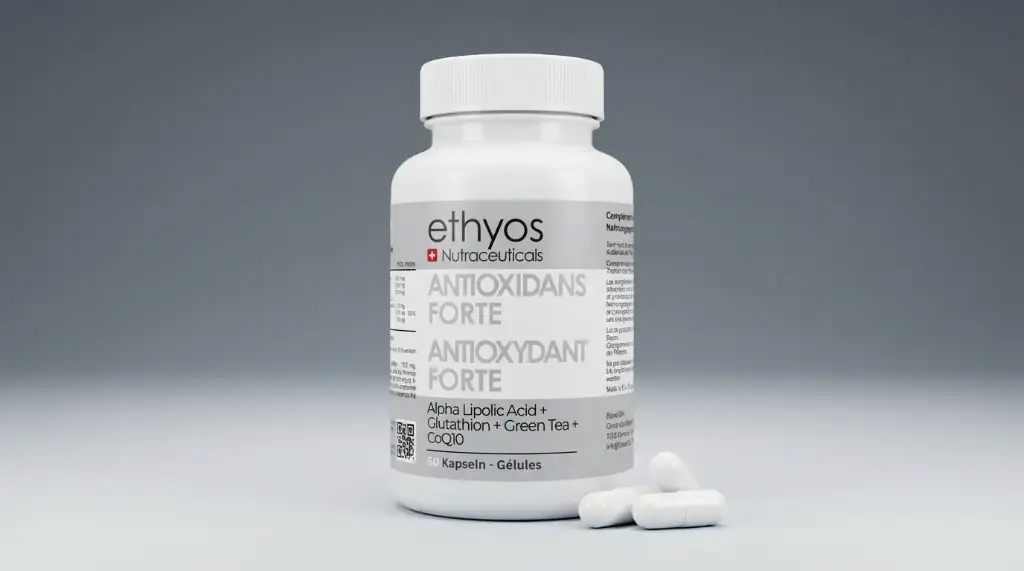

ethyos - Advanced Antioxidant Formula
Overview
This formulation is built around a multi-ingredient antioxidant approach for everyday wellness. It combines reduced glutathione, alpha-lipoic acid, vitamin E, and a standardized green tea extract to support normal oxidative balance. Coenzyme Q10 and a small amount of caffeine round out the blend for cellular and lifestyle support. The overall intent is broad, non-medical support for people with active or demanding routines.
Primary focus: antioxidant support
Reduced glutathione is included as a central intracellular antioxidant used in many wellness programs. Alpha-lipoic acid is often described as a versatile antioxidant that can participate in multiple redox pathways. Vitamin E (DL-alpha-tocopheryl acetate) contributes lipid-phase antioxidant support, which is relevant for cell membranes. Green tea extract provides polyphenols, including EGCG, to complement the antioxidant profile.
Cellular and mitochondrial support
Coenzyme Q10 (ubiquinone) is included to support normal mitochondrial function and cellular energy processes. This can be useful when the goal is to maintain day-to-day cellular performance under typical lifestyle stressors. The antioxidant components are paired with CoQ10 to create a formula that addresses both oxidative balance and energy-related cellular pathways. The result is a broad cellular-health oriented blend rather than a single-nutrient product.
Green tea polyphenols and formula balance
The green tea extract is standardized to polyphenols and EGCG, providing a consistent botanical contribution per serving. Polyphenols are commonly used in nutrition to support normal responses to oxidative challenges. In this formula, green tea complements vitamin E by adding plant-derived antioxidant compounds with different characteristics. This helps diversify the antioxidant inputs without relying on one ingredient alone.
Alertness and daily routine fit
The product includes 21 mg of caffeine, which may provide a mild alertness effect for some users. This amount is relatively modest compared with many caffeinated beverages, but sensitivity varies widely. Users who already consume caffeine may wish to consider total daily intake. Those who prefer stimulant-free supplements may choose to take it earlier in the day.
Synergy and practical considerations
Glutathione, alpha-lipoic acid, vitamin E, and green tea extract are combined to provide multi-angle antioxidant coverage. Coenzyme Q10 adds a complementary role in cellular energy pathways, which can be relevant when oxidative demands are higher. The capsule format supports convenient daily use without requiring mixing or preparation. As with any supplement, consistent use alongside balanced nutrition and lifestyle habits is the most practical approach.
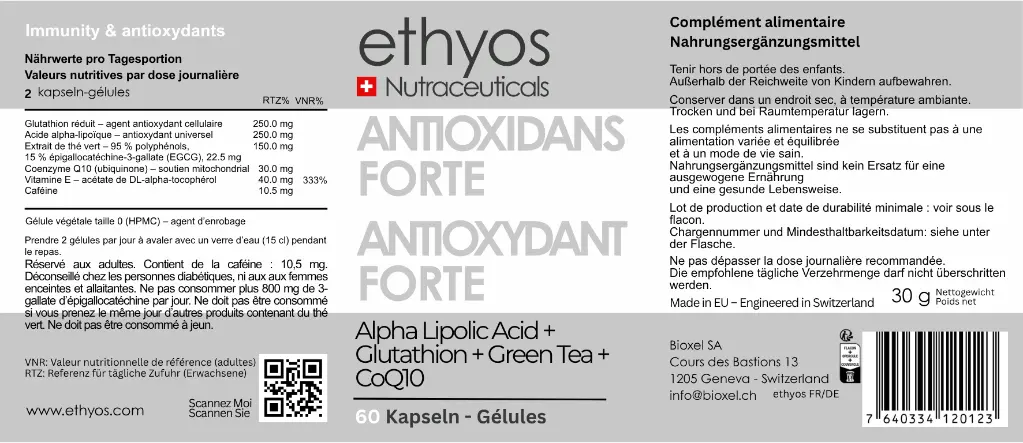
| Class | Ingredient | Quantity | NRV% |
|---|---|---|---|
| Other active | Glutathione (reduced) – cellular antioxidant agent | 250.0 mg | 0.0 |
| Other active | Alpha-lipoic acid – universal antioxidant | 250.0 mg | 0.0 |
| Plant extract | Green tea extract – 95% polyphenols, 15% epigallocatechin-3-gallate (EGCG) 22.5 mg | 150.0 mg | 0.0 |
| Other active | Coenzyme Q10 (ubiquinone) – mitochondrial support | 30.0 mg | 0.0 |
| Vitamin | Vitamin E – DL-alpha-tocopheryl acetate | 40.0 mg | 333.0 |
| Other active | Caffeine | 21.0 mg | 0.0 |
| Envelope | Vegetable capsule size 00 (hydroxypropylmethylcellulose) – coating agent | 236.0 mg | 0.0 |
Capsules Ingredients: Vegetable capsule size 00 (hydroxypropylmethylcellulose) – coating agent
Allergens:
| Title | Description |
|---|---|
| Pregnancy – Medium Risk | Not recommended during pregnancy unless advised by a healthcare professional due to caffeine and concentrated green tea extract. |
| Breastfeeding – Medium Risk | Caffeine can pass into breast milk and green tea extract may not be suitable for all nursing individuals; seek professional advice. |
| Caffeine sensitivity – Medium Risk | Caffeine (21 mg) may cause unwanted stimulation in sensitive individuals. |
| Liver sensitivity – Medium Risk | Concentrated green tea extracts have been associated with intolerance in some people; discontinue use if unusual symptoms occur. |
| Bleeding tendency or upcoming surgery – Medium Risk | Vitamin E and green tea constituents may not be suitable for individuals with bleeding concerns; consult a clinician before use. |
| Diabetes or glucose-management concerns – Medium Risk | Alpha-lipoic acid may influence glucose handling; monitoring and professional guidance may be appropriate. |
| Anxiety disorders – Low Risk | Caffeine may worsen feelings of nervousness in some individuals. |
| Title | Description |
|---|---|
| Stimulation or jitteriness – Medium Risk | Caffeine may cause restlessness, tremor, or a wired feeling, especially when combined with other caffeine sources. |
| Sleep disturbance – Medium Risk | Taking caffeine-containing products later in the day may make it harder to fall asleep. |
| Gastrointestinal discomfort – Low Risk | Alpha-lipoic acid and green tea extract may cause nausea or stomach upset in some users. |
| Headache – Low Risk | Caffeine or changes in caffeine intake can trigger headaches in susceptible individuals. |
| Skin flushing or rash – Low Risk | Botanical extracts and antioxidants can rarely cause sensitivity reactions. |
| Title | Description |
|---|---|
| Anticoagulants/antiplatelets – Medium Risk | Vitamin E and green tea constituents may affect bleeding risk; consult a healthcare professional before combining. |
| Antidiabetic medications/insulin – Medium Risk | Alpha-lipoic acid may alter glucose handling, which could require monitoring when used with glucose-lowering medicines. |
| Stimulant medications – Medium Risk | Caffeine may add to stimulant effects and increase side effects such as palpitations or anxiety. |
| MAO inhibitors – Medium Risk | Caffeine intake may need caution with MAO inhibitors due to potential increased stimulant effects. |
| Blood pressure medications – Low Risk | Caffeine can transiently affect blood pressure in some individuals; monitor if sensitive. |
| Title | Description |
|---|---|
| General supplement warning – Low Risk | Food supplements should not be used as a substitute for a varied and balanced diet and a healthy lifestyle. |
| Daily dose warning – Low Risk | Do not exceed the recommended daily intake. |
| Children warning – Low Risk | Keep out of reach of young children. |
| Pregnancy and breastfeeding warning – Medium Risk | If you are pregnant, breastfeeding, trying to conceive, or under medical supervision, consult a healthcare professional before use. |
| Caffeine intake warning – Medium Risk | Contains caffeine (21 mg per serving); consider total daily caffeine intake and avoid use close to bedtime if sensitive. |
| Medication use warning – Medium Risk | Consult a healthcare professional before use if taking anticoagulants/antiplatelets or glucose-lowering medication. |
| Manufacturing trace warning – Low Risk | May contain very small amounts of allergens due to shared production equipment, even when not present in the ingredient list. |
| Title | Description | Bioavailability |
|---|---|---|
| Glutathione (reduced) – cellular antioxidant agent | Provides reduced glutathione as a core antioxidant component of the formula. | Standard form used in food supplements. |
| Alpha-lipoic acid – universal antioxidant | Adds alpha-lipoic acid to support the product’s broad antioxidant positioning. | Standard nutrient form with typical physiological availability. |
| Green tea extract – 95% polyphenols, 15% epigallocatechin-3-gallate (EGCG) 22.5 mg | Supplies standardized green tea polyphenols, including EGCG, to complement the antioxidant blend. | Standardized botanical extract with typical absorption characteristics. |
| Coenzyme Q10 (ubiquinone) – mitochondrial support | Provides ubiquinone (CoQ10) to support normal cellular energy-related processes. | Coenzyme form (ubiquinone) used in supplements with typical absorption characteristics. |
| Vitamin E – DL-alpha-tocopheryl acetate | Contributes vitamin E as a fat-soluble antioxidant nutrient in the formula. | Esterified vitamin E form (DL-alpha-tocopheryl acetate) commonly used in supplements. |
| Caffeine | Provides a mild stimulant component to support alertness in the overall product experience. | Standard form used in food supplements. |
| Vegetable capsule size 00 (hydroxypropylmethylcellulose) – coating agent | Capsule shell/coating agent used to deliver the ingredients. | Not applicable for excipients. |
| Allergen | Source Ingredient | Mandatory | Inference |
|---|---|---|---|
| None | None | No | None |
Population & target users: Adults (18+) seeking daily antioxidant and cellular support; not intended for children. How to take: Take 1 capsule daily with water, preferably with a meal; avoid taking late in the day if sensitive to caffeine. Duration of use: Suitable for ongoing use; consider periodic breaks and reassess based on diet, lifestyle, and tolerance. Storage & conservation: Store in a cool, dry place away from direct sunlight; keep the container tightly closed.
| MDC BRANDS: Ethyos |
Bienfaits
Antioxidant Support
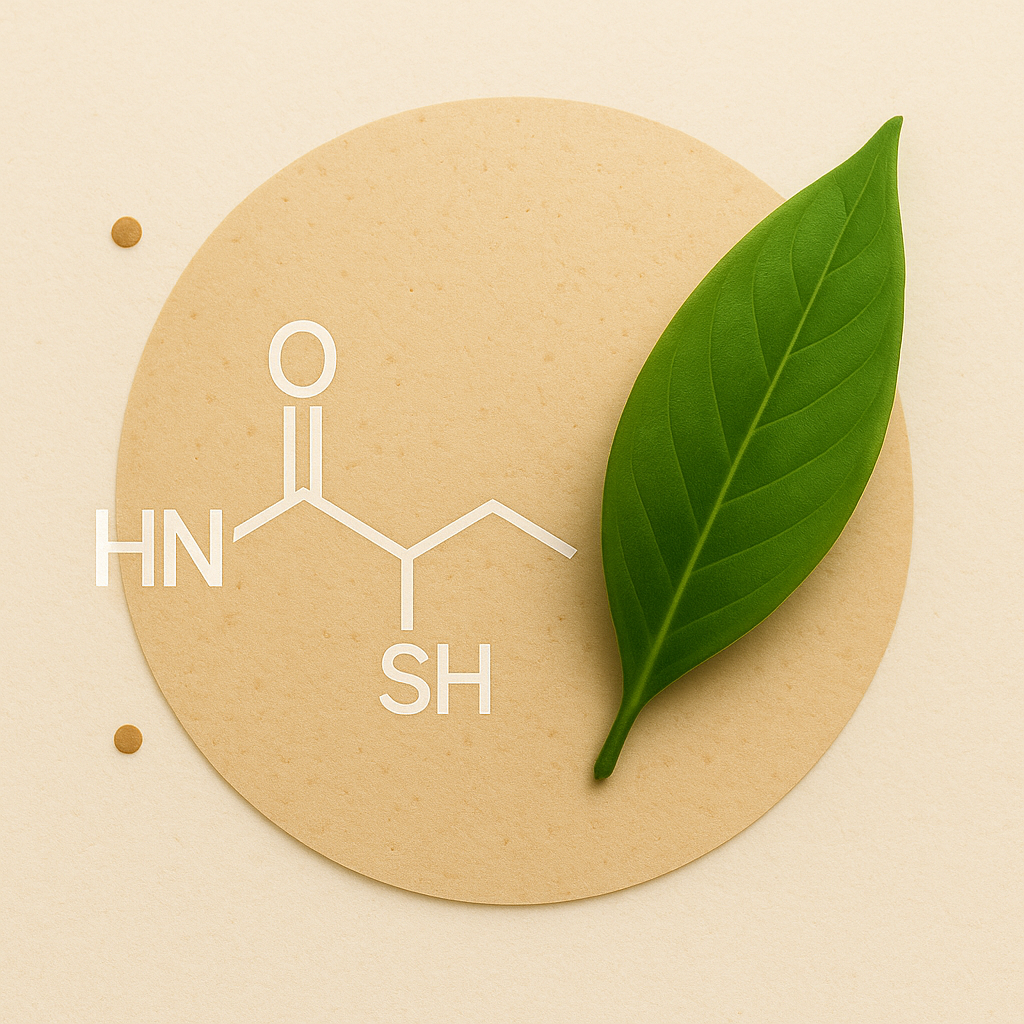
Designed for daily antioxidant coverage using a multi-pathway blend of reduced glutathione, alpha-lipoic acid, vitamin E, and green tea extract (polyphenols/EGCG). These ingredients are commonly used to help support the body’s normal response to oxidative stress from lifestyle factors such as training load, travel, or environmental exposure. Coenzyme Q10 complements the formula by supporting cellular energy processes that can be impacted by oxidative demands.

Cellular Health
Supports everyday cellular maintenance by combining glutathione (reduced) with alpha-lipoic acid and coenzyme Q10 (ubiquinone), which are frequently used in wellness routines focused on cellular function. Vitamin E and green tea polyphenols add lipid- and water-phase antioxidant coverage to help maintain normal cell membrane integrity. This use case is suited to people looking for broad foundational support rather than a single targeted nutrient.
Energy Metabolism
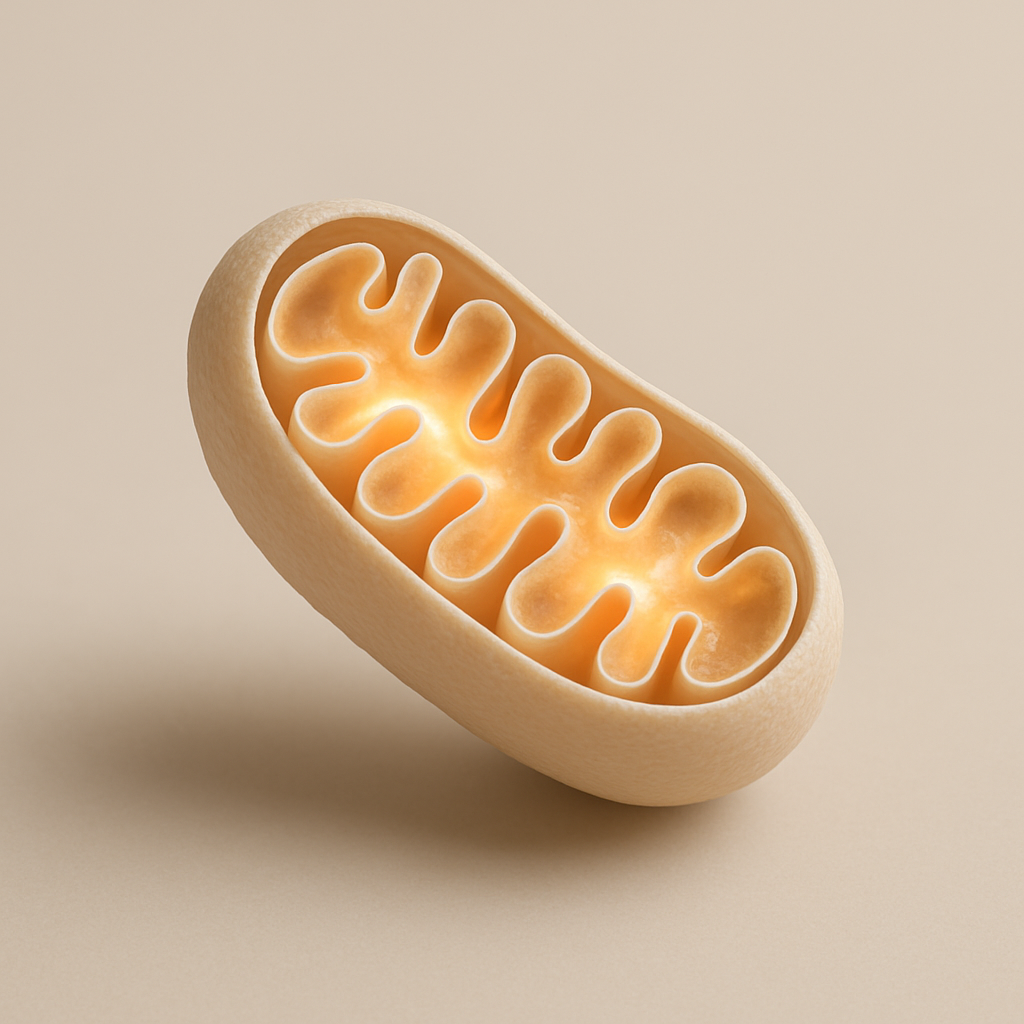
Coenzyme Q10 (ubiquinone) is included to support normal mitochondrial energy pathways, while alpha-lipoic acid is often used in metabolic-focused formulas. A small amount of caffeine (21 mg) may provide a mild, short-term alertness lift for some users. This benefit is supportive in nature and best viewed as complementary to sleep, nutrition, and activity habits.

Healthy Aging
The combination of vitamin E, green tea extract (polyphenols/EGCG), glutathione, and alpha-lipoic acid aligns with wellness routines that emphasize long-term oxidative balance. These ingredients are commonly used to support normal cellular resilience over time. This is a general lifestyle-oriented use case rather than a promise of specific outcomes.

Mental Performance
The formula contains caffeine (21 mg), which may help support alertness and perceived focus in some individuals. Coenzyme Q10 is also included as a cellular-energy cofactor that can fit into performance-oriented routines. Effects can vary based on caffeine sensitivity and overall stimulant intake.