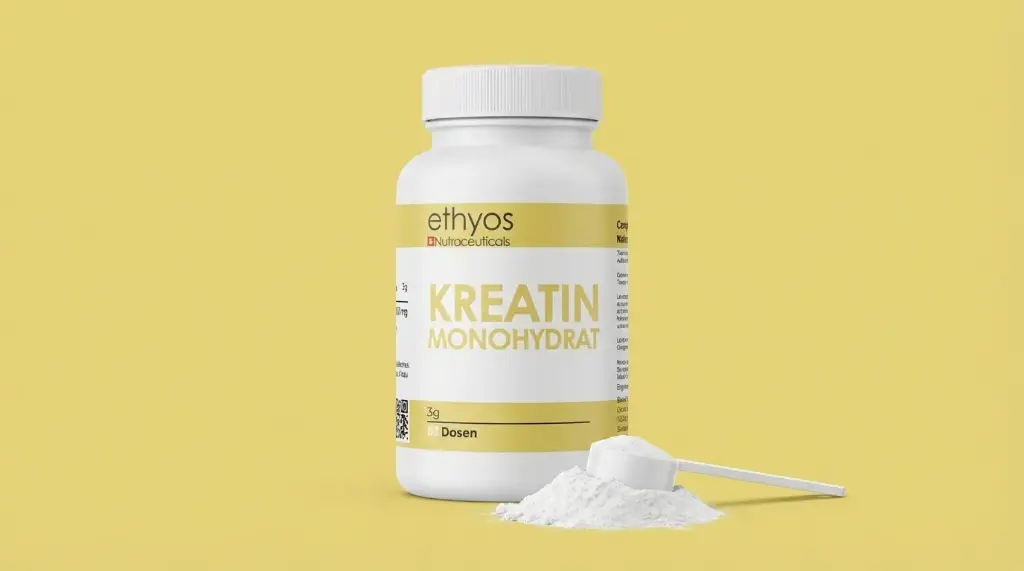
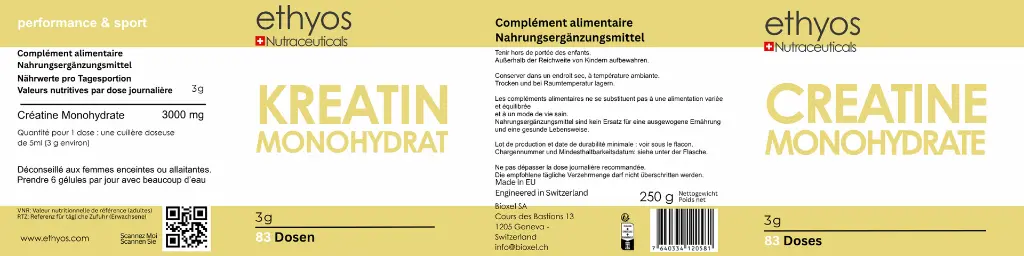


ethyos - Creatine Monohydrate 3 g
Overview
Discover the potential benefits of creatine monohydrate for overall well-being and enhanced physical performance. This formulation focuses on delivering effective doses per serving to support your active lifestyle.
Muscle Support
Creatine is widely recognized for its role in supporting muscular health by aiding the production of phosphocreatine, a key component of muscle contraction energy.
Energy and Endurance
Enhance your energy output and endurance during exercises with creatine, which helps to replenish ATP stores for sustained activity.
Performance and Cognitive Benefits
Incorporating creatine in your routine may not only boost athletic performance but also support cognitive health by playing a role in brain energy regulation.
Aging Support
Consider creatine for its antioxidant properties, which may contribute to anti-aging by mitigating oxidative stress.
| Class | Ingredient | Quantity | NRV% |
|---|---|---|---|
| Nutrient | Creatine monohydrate | 3000.0 mg | 0 |
Capsules Ingredients: None specified
Allergens:
| Title | Description |
|---|---|
| Kidney Disorders – Medium Risk | Creatine should be used with caution in individuals with pre-existing kidney disorders. |
| Pregnancy and Breastfeeding – Medium Risk | The use of creatine during pregnancy or breastfeeding should be consulted with a healthcare provider. |
| Dehydration Risks – Medium Risk | Increased fluid intake is recommended to avoid dehydration while taking creatine. |
| Title | Description |
|---|---|
| Gastrointestinal Discomfort – Low Risk | Some individuals may experience stomach upset with creatine use. |
| Water Retention – Low Risk | Creatine usage might lead to water retention and weight gain. |
| Muscle Cramping – Low Risk | In rare cases, creatine can cause muscle cramps. |
| Title | Description |
|---|---|
| NSAIDs Interaction – Low Risk | Creatine may interact with non-steroidal anti-inflammatory drugs. |
| Diuretics Interaction – Medium Risk | Creatine may enhance effects of diuretics, increasing dehydration risk. |
| Nephrotoxic Drugs – Medium Risk | Use caution with medications affecting kidney function. |
| Title | Description |
|---|---|
| General supplement warning – Low Risk | Food supplements should not be used as a substitute for a varied and balanced diet and a healthy lifestyle. |
| Daily dose warning – Low Risk | Do not exceed the recommended daily intake. |
| Children warning – Low Risk | Keep out of reach of young children. |
| Kidney disorder warning – Medium Risk | Consult a healthcare provider if you have a kidney disorder prior to use. |
| Pregnancy/Breastfeeding warning – Medium Risk | Consult a healthcare provider prior to use if pregnant or breastfeeding. |
| Manufacturing trace warning – Low Risk | May contain very small amounts of allergens due to shared production equipment, even when not present in the ingredient list. |
| Title | Description | Bioavailability |
|---|---|---|
| Creatine monohydrate | Supports muscle energy metabolism and performance during high-intensity exercise. | Standard form used in food supplements. |
| Allergen | Source Ingredient | Mandatory | Inference |
|---|---|---|---|
| None | None | No | None |
<p><strong>Intended Users:</strong> For adults 18 and over aiming to enhance exercise performance.</p><p><strong>Instructions:</strong> Take one serving of 3 g daily, preferably around exercise time. Dissolve in water or juice.</p><p><strong>Duration:</strong> Suitable for long-term use with periodic breaks.</p><p><strong>Storage:</strong> Store in a cool, dry place, tightly closed.</p>

Bienfaits

Muscular Health
Creatine can support muscular health by enhancing the synthesis of phosphocreatine, which is essential for muscle contractions during high-intensity exercises.
Energy & Endurance
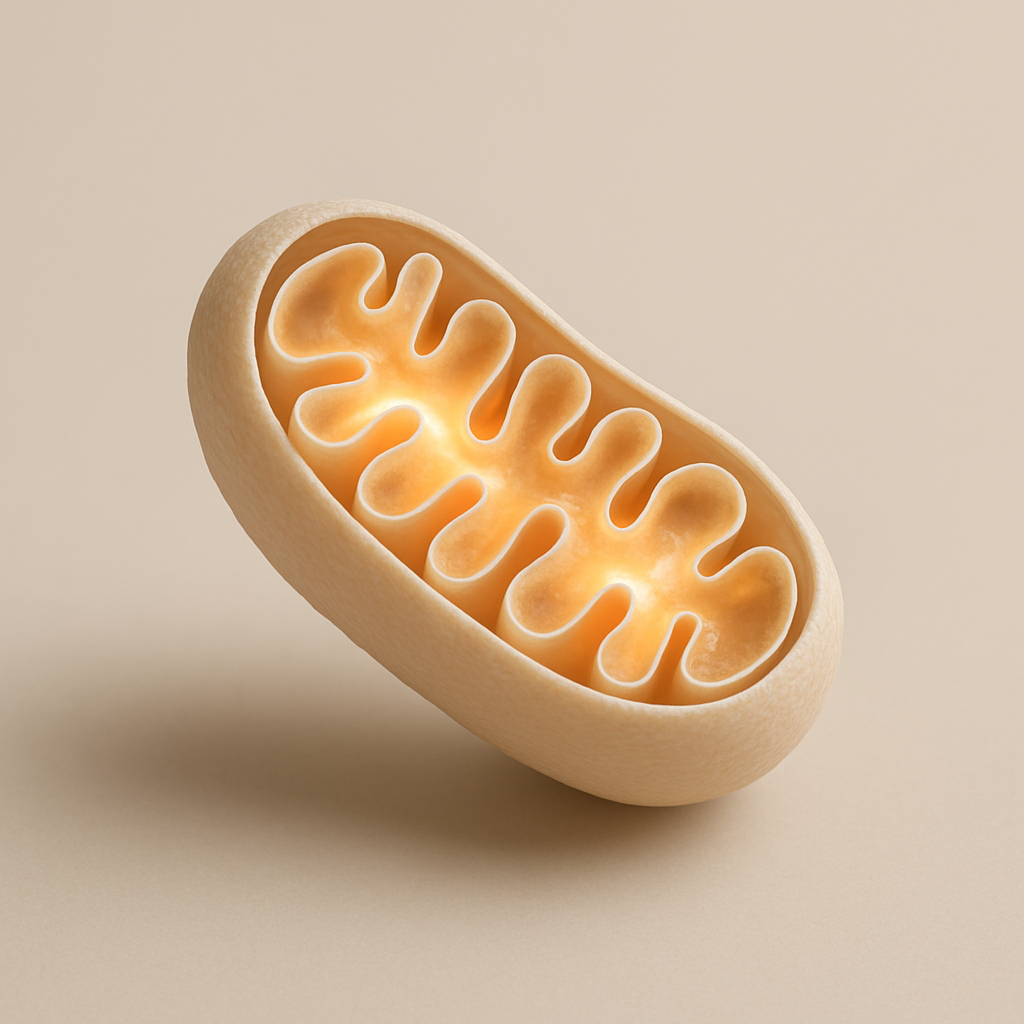
Creatine is known to aid in energy production by replenishing ATP stores, which may enhance endurance during prolonged physical activities.

Athletic Performance
By increasing energy availability and muscular strength, creatine contributes to improved athletic performance, especially in short bursts of intensive activity.

Cognitive Health
Research suggests that creatine may play a role in cognitive health by supporting brain energy metabolism.

Anti-Aging
Creatine has been studied for its potential role in reducing oxidative stress, which can contribute to aging processes.